
 v
v
A3 meisland complex
year:
client:
typology:
location:
site area:
no. of stories:
status:
2019
ju Jia Construction Co., Ltd.
residential
xizhi, Taipei, Taiwan
1608 ㎡
B3 – 15F
completed
read more
The site is located in the Xizhi district of New Taipei City, set on a river island defined by the intersection of Freeways No. 1 and No. 3 to the south and east, and a sweeping bend of the Danshui River to the north and west. The location offers generous views in all directions, though development is partially constrained by existing high-voltage power lines and towers.
The masterplan organizes the neighborhood along a ring road that traverses the island. At its center, two buildings and a linear park form the heart of the new community. Each residential building is tailored to slightly different target groups, encouraging a diverse mix of ages and lifestyles and creating a vibrant, multi-generational environment.
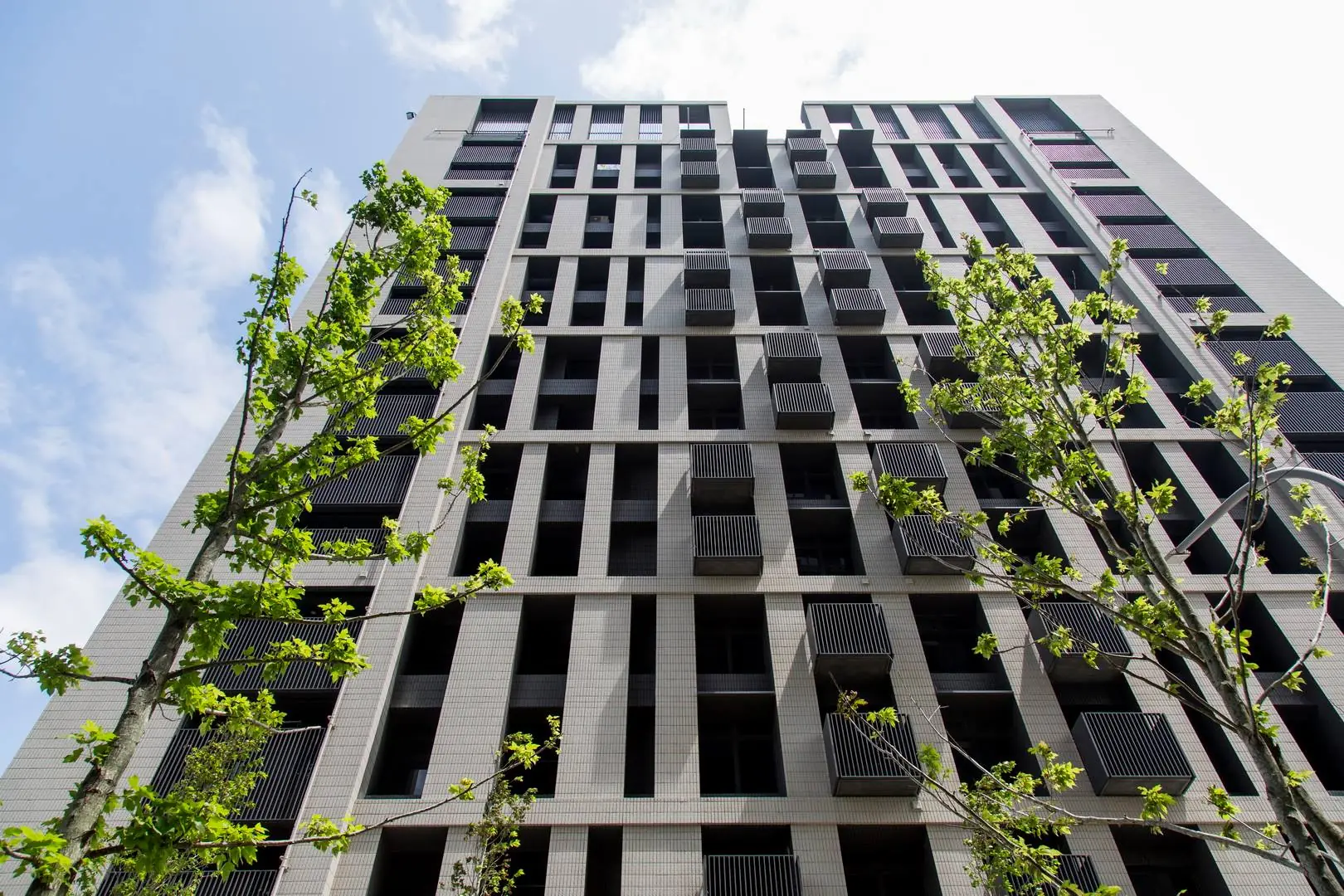
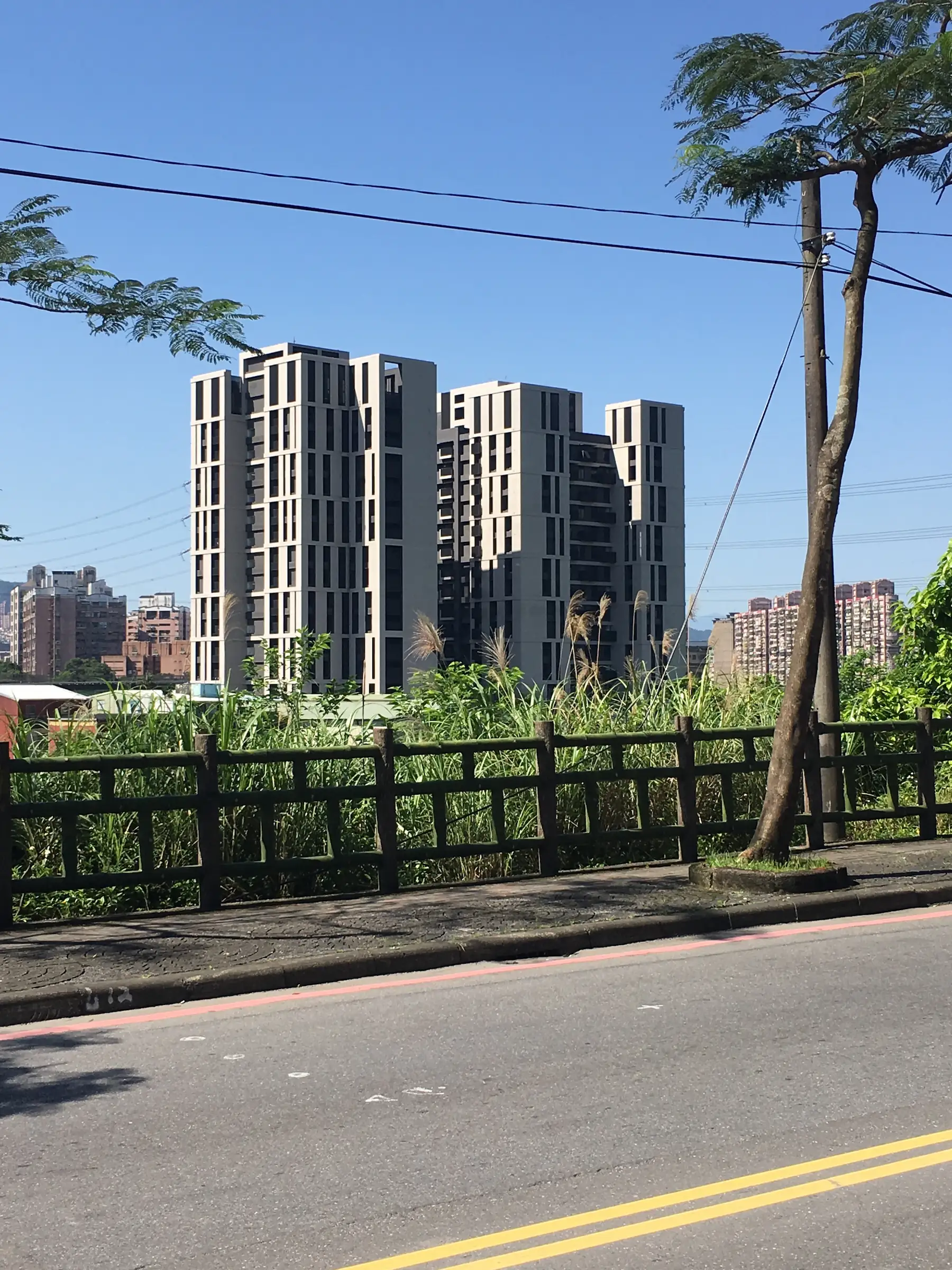
When we joined the project, the floor plans and structural grid were already defined. Our role was to develop the façade and give the buildings a clear architectural identity. Because the structural grid lacked a regular repetitive module, we introduced an exterior system of pilasters that allowed the envelope to follow simple, coherent design principles. These deep pilasters and columns naturally enhance self-shading, reducing solar heat gain—a straightforward yet effective strategy of passive, climate-responsive design.
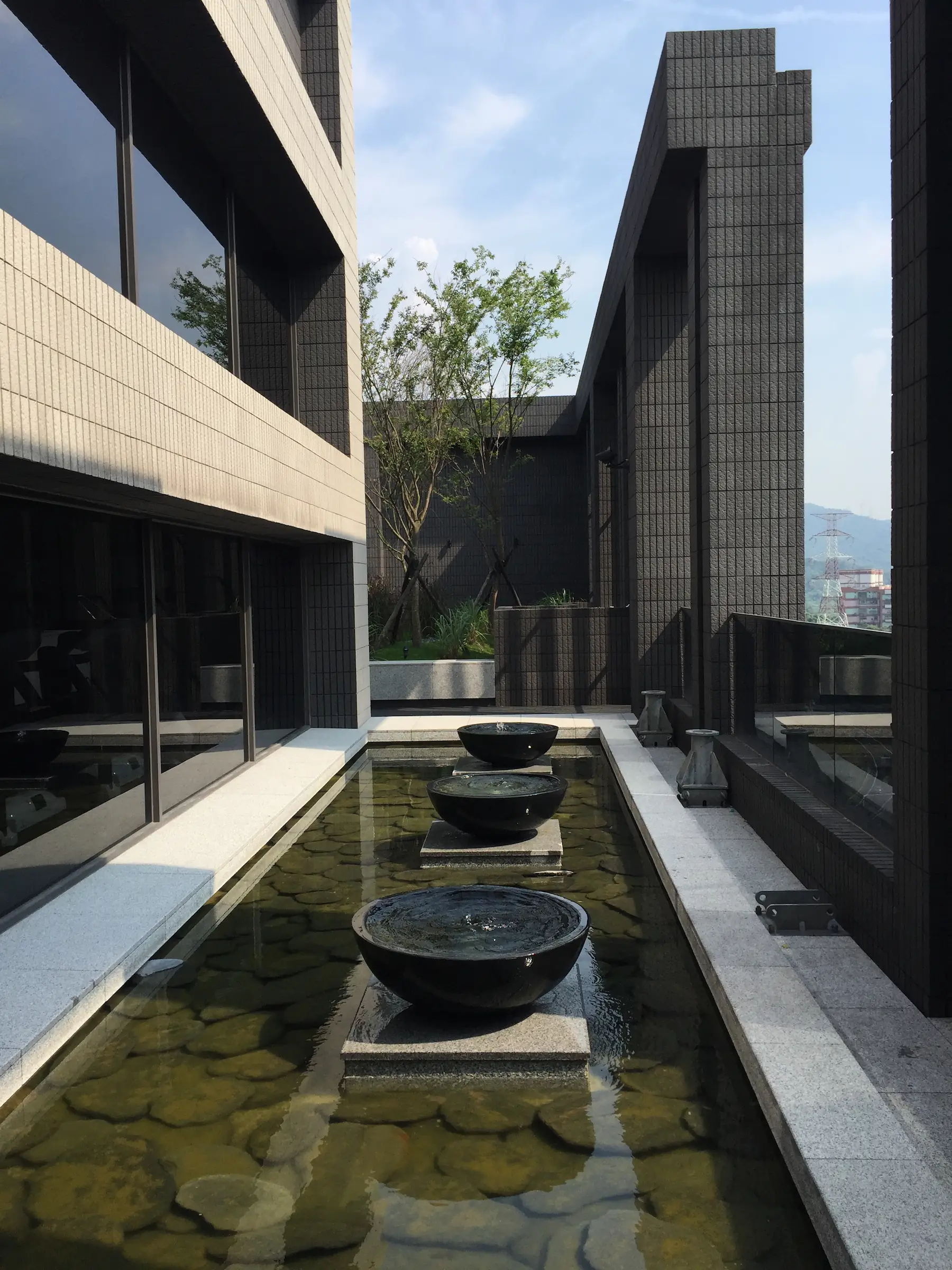
The units in the first phase of the development are relatively compact, so the façade openings were designed to serve multiple functions for residents. To create a unified appearance, we selected a reflective exterior finish that helps mitigate heat. Within the recessed areas, all window frames, balustrades, railings, and related elements share a dark tone matching the façade tiles. This reduces visual clutter and strengthens the contrast between the light outer surface and the deep, dark recesses—a contemporary reinterpretation of traditional Chinese ivory carvings that lends the building a distinctive cultural identity within its Taiwanese context.
The required “rain shields” were integrated by articulating the pilasters in a double-story rhythm, giving the façade a slender, elegant expression while naturally subdividing the openings. Additional balconies were placed within these double-height recesses and clad in dark metal panels and fins, providing outward views while preserving privacy for residents.